


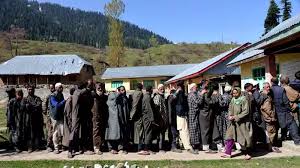
After the abrogation of Article 370 in August 2019, a class of neo-nationalists emerged in Kashmir. These political figures, largely seen as pragmatic and opportunistic, sought to align themselves with the Bharatiya Janata Party (BJP) government in Delhi, banking on the opportunities provided by the central government’s push to integrate Jammu and Kashmir more fully into the Indian Union. For these individuals, loyalty to Delhi was seen as a route to power, privilege, and influence in the new post-370 political reality of Kashmir.
The years following the abrogation saw leaders such as Sajad Lone, Altaf Bukhari and his team, Junaid Mattu, Sheikh Ishfaq Jabbar, Safeena Beigh, Sheikh Imran, Junaid Mir, and Tawseef Raina rise to prominence as they actively worked to stay close to the corridors of power in Delhi. Their brand of neo-nationalism revolved around supporting the BJP’s vision of a unified India, advocating for development, integration, and prosperity, which they presented as being achievable through closer ties with the central government.
Until the 2024 parliamentary elections, these individuals championed the idea of nationalism, seeking favor from the BJP administration by portraying themselves as the representatives of a new Kashmir, one that was no longer defined by separatist politics or demands for autonomy. They distanced themselves from the traditional political narratives in the Valley, emphasizing their alignment with the national government’s agenda. For a time, this worked. Many of these leaders secured positions of power and influence, benefiting from government patronage, as they were seen as reliable allies of the BJP’s vision for Kashmir.
However, as the dust settled after the 2024 parliamentary elections, a dramatic and unexpected shift occurred. These very leaders, who had built their political careers around loyalty to Delhi, began shifting their stances. The post-election atmosphere in Kashmir was marked by a stunning realignment. Instead of maintaining their nationalist credentials, they began to pivot towards a more regionally-focused narrative. In an even more surprising twist, some of these neo-nationalists started gravitating towards individuals and groups associated with the Jamaat-e-Islami (JeI), an organization with a history of promoting conservative and separatist politics in the region. The irony was glaring—leaders who had once staunchly supported the BJP’s integrationist policies were now aligning themselves with groups that had historically resisted them.
This transformation raises several critical questions: What changed after the 2024 elections that caused such a sharp political realignment? Why did these leaders, who had once been the torchbearers of nationalism, suddenly shift their loyalties to align with regionalist forces and organizations like JeI? Understanding the factors behind this political about-face offers insights into the fluid and unpredictable nature of Kashmir’s political landscape.
Neo-Nationalists in Transition
At the heart of this shift lies a complex interplay of political survival and pragmatism. In the years following the abrogation of Article 370, these neo-nationalists had tied their fortunes to the BJP’s central government, portraying themselves as champions of peace, development, and integration. However, the 2024 parliamentary elections seemed to signal a change in the winds. The results suggested that there was a limit to how far the nationalist agenda could resonate with the Kashmiri electorate. While these leaders may have enjoyed patronage and benefits from Delhi, their local political base was growing increasingly restless, yearning for leaders who would address their regional aspirations and grievances.
The post-election period saw these leaders recalibrating their political strategies. Recognizing that they could no longer sustain their influence solely through their loyalty to the BJP, they began to reorient themselves towards regional concerns, a move that included aligning with groups like JeI. This realignment was not a mere rhetorical shift—it was a recalibration aimed at maintaining political relevance in a rapidly changing environment. Leaders like Sajad Lone and Junaid Mattu, once vocal advocates of Delhi’s agenda, now found themselves navigating the complex terrain of regionalism, where political survival often meant embracing Kashmiri identity and grievances over national loyalty.
Their sudden pivot towards JeI and other similar groups signaled a strategic recognition of the powerful role that religious and regional identity plays in Kashmiri politics. The influence of groups like JeI, which have deep roots in the Valley’s social and political landscape, cannot be underestimated. These organizations have historically provided a platform for expressing the political aspirations of Kashmiris, often in opposition to the central government’s policies. By aligning themselves with such groups, the neo-nationalists were making a clear statement: they were now more interested in resonating with the local electorate than maintaining their allegiance to the central government.
The Rise of Regionalism
The 2024 parliamentary elections marked the beginning of this dramatic political shift. While these neo-nationalists had once championed the cause of integration and development under the BJP’s leadership, the election results highlighted the deep-seated regional and religious sentiments that continue to shape Kashmiri politics. The rise of regionalism in this context reflects the enduring tension between central control and the desire for regional autonomy that has defined Kashmir’s political history.
This shift also underscores the pragmatic nature of Kashmiri politics. The leaders who once presented themselves as staunch nationalists are now positioning themselves as protectors of Kashmiri identity and culture. This transformation was not merely a political strategy—it was a recognition of the complex dynamics of Kashmiri society, where political survival often depends on the ability to navigate the competing demands of nationalism and regionalism.
Leaders like Sheikh Imran and Altaf Bukhari, who had previously enjoyed the benefits of their proximity to Delhi, are now increasingly focused on addressing the local concerns of the Kashmiri people. Their rhetoric has shifted from emphasizing national development to highlighting the grievances and aspirations of the Valley’s residents, many of whom feel alienated by the central government’s policies. This shift towards regionalism reflects a broader trend in Kashmiri politics, where local identity and religious sentiment continue to play a significant role in shaping the political landscape.
The Political Fallout
The realignment of these neo-nationalists has significant implications for both the political landscape of Kashmir and the central government’s efforts to maintain control over the region. The sudden shift towards JeI and similar groups raises concerns about the future of governance in the Valley, particularly as it relates to security and stability. For the BJP, which has invested heavily in its narrative of national integration, the realignment of its former allies towards more regional and religiously conservative forces presents a significant challenge.
Moreover, this political shift has raised questions about the durability of the post-370 political order in Kashmir. While the central government’s policies were initially met with some degree of support from these neo-nationalists, the post-election realignments suggest that there are limits to how far the BJP’s vision for Kashmir can be sustained. The rise of regionalism and the return of conservative religious groups to the political fold underscores the enduring complexity of Kashmir’s political dynamics, where power is often determined by the ability to navigate between national and regional interests.
The Future of Kashmiri Politics
As the political landscape of Kashmir continues to evolve, the realignment of neo-nationalists towards regionalism highlights the fluid and unpredictable nature of politics in the region. The sudden shift from nationalism to regionalism, particularly the alignment with groups like JeI, raises important questions about the future of governance, security, and stability in Kashmir.
For the central government, the challenge will be to navigate this shifting political terrain while maintaining its broader vision for Kashmir. The rise of regionalism and the resurgence of conservative religious forces suggest that the political landscape in Kashmir remains deeply contested, with local identity and grievances continuing to play a central role in shaping the region’s future.
Ultimately, the political shifts witnessed after the 2024 parliamentary elections serve as a reminder that in Kashmir, political survival often depends on the ability to adapt to the changing dynamics of the region. Whether these neo-nationalists will be able to maintain their influence in the face of these shifting allegiances remains to be seen, but one thing is clear—the political landscape of Kashmir is as complex and unpredictable as ever.
