

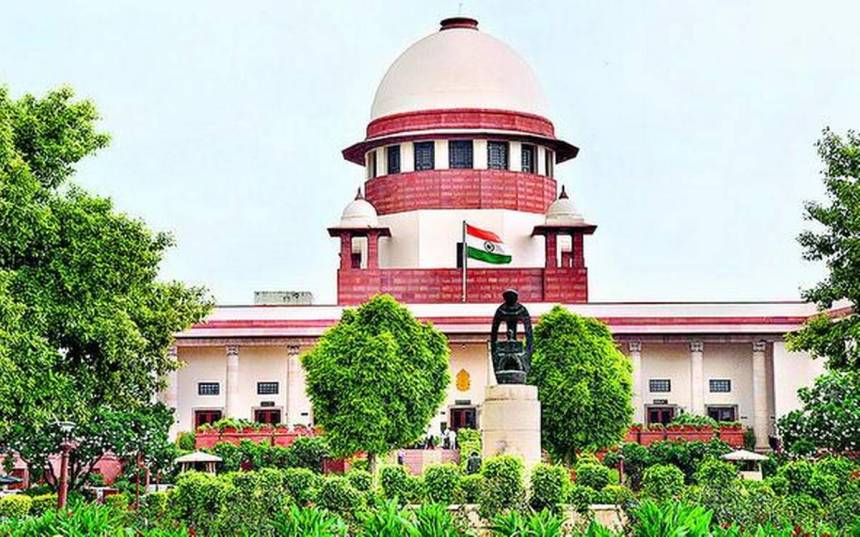
Top court revives 2012 framework, seeks Centre and UGC replies by March 19
New Delhi,
The Supreme Court on Thursday stayed the University Grants Commission’s 2026 equity regulations aimed at preventing caste-based discrimination on campuses, observing that the framework is “prima facie vague”, capable of misuse and may have “very sweeping consequences” with a “dangerous impact” of dividing society.
A Bench comprising Chief Justice Surya Kant and Justice Joymalya Bagchi kept in abeyance the Supreme Court’s operation of the University Grants Commission (Promotion of Equity in Higher Education Institutions) Regulations, 2026, and sought responses from the Centre and the University Grants Commission by March 19 on petitions challenging the rules.
“If we do not intervene, it will have a dangerous impact and divide society,” the Bench said, adding that the language of the regulations appears vague and needs expert review so it is not exploited. While staying the 2026 rules—particularly the “non-inclusionary” definition of caste-based discrimination under Regulation 3(1)(c) that limits protection to SCs, STs and OBCs—the court revived the 2012 equity regulations to ensure students are not left without any remedy.
“In exercise of our powers under Article 142, we direct that the 2012 Regulations shall continue in force till further orders,” the Bench ordered. It issued notice returnable on March 19, with the Solicitor General accepting notice on behalf of the Centre, and directed that the new petitions be tagged with a related 2019 plea.
The 2026 regulations had triggered protests by student groups across the country demanding their rollback. During the hearing, the Chief Justice suggested the matter be reconsidered by a committee of eminent jurists and experts attuned to social realities, warning that campus frameworks can shape how people behave outside universities as well.
At the outset, the Bench questioned the need for a separate definition of “caste-based discrimination” when Regulation 3(1)(e) already provides a broad, all-encompassing definition of “discrimination”. It also asked why ragging—described as a common form of harassment in educational institutions—was not addressed at all.
The court said the regulations are “prima facie vague” and “capable of misuse”. Advocate Vishnu Shankar Jain, appearing for one petitioner, assailed Regulation 3(1)(c) for defining caste-based discrimination solely as discrimination against members of SCs, STs and OBCs, arguing that it excludes general-category students and violates Article 14 of the Constitution. He said a separate definition was unnecessary given the broader definition already exists.
The Bench tested the scope of the rules with hypotheticals, including regional discrimination—asking whether a student from southern India humiliated in a northern campus would be protected—and whether ragging of a general-category fresher by a senior from a reserved category would find any remedy under the 2026 framework. The questions underscored the court’s concern that harassment often occurs along junior–senior lines and cannot be reduced to a single axis.
“Whatever we have gained in terms of achieving a casteless society, are we now becoming regressive?” the Bench asked, expressing strong disapproval of measures like separate hostels for different castes. “For God’s sake, don’t do this! We all used to stay together,” the Chief Justice remarked, noting the growth of inter-caste marriages.
Justice Bagchi stressed that the ideal of unity must be reflected within educational institutions. Senior advocate Indira Jaising, appearing in a 2019 PIL filed by the mothers of Rohith Vemula and Payal Tadvi—which led to the framing of the 2026 rules—defended the regulations.
The court ultimately cautioned that the new framework could have far-reaching consequences and risk deepening social fault lines, and therefore warranted reconsideration. The matter will be taken up again after responses are filed.


